
¡Hola mis amigas!
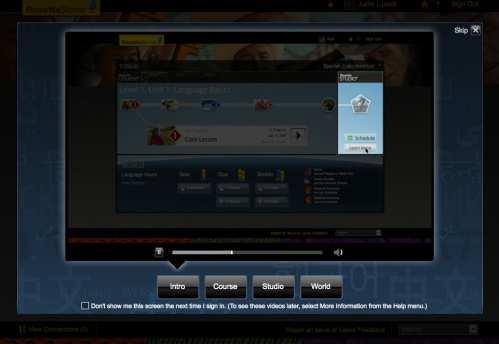
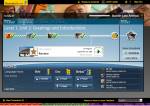
This week, I was greeted by an instructional video that started the minute I signed into TOTALe. It gave a great overview of what the different parts of the course entailed, and how to navigate the various sections…and I couldn’t help but wonder why it didn’t show the first time I started the program!
Of course, the likely culprit is my slow satellite connection of doom; it is totally possible that the screen tried to show when I first started the program five lessons ago, but was reset in all of the screen refreshes. Ah, country living… 😉
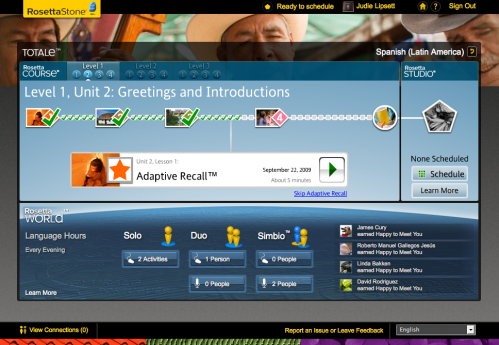
I started two lessons before the fourth section, and as you may recall from Unit One, the fourth part is the section that takes for-ev-vuh to get through; this time was no exception.
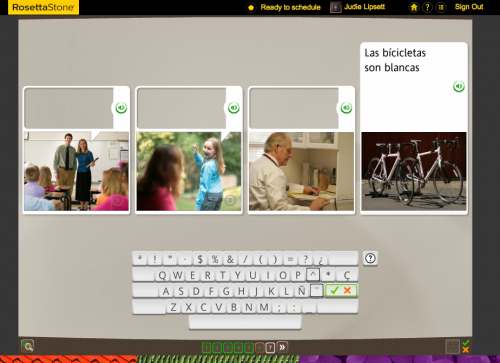
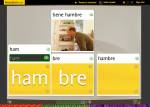
The program jumped right into reviews from the lessons I had learned in previous weeks, including writing out sentences with the proper capitalization and punctuation – in this case a tilded “n”. Just as I have learned to recognize the “nyuh” sound made when “ñ” is written, there were other sounds I was going to have to learn to recognize when spoken and properly punctuate when written; suddenly things were getting a bit more complicated.
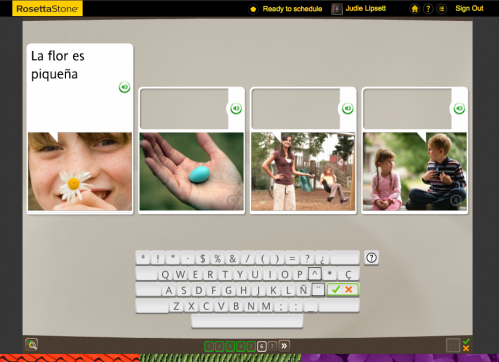
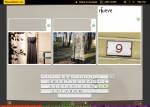
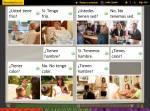
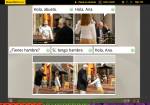
Notice all the little accent marks above the various vowels? Those are what I’m talking about. But first…
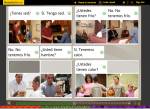
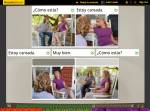
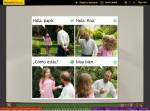
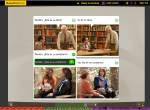
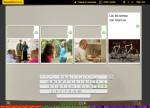
“How are you?” “I’m sleepy. [And] how are you?” “Very good.”
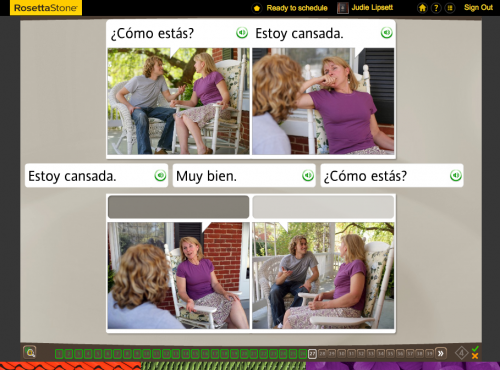
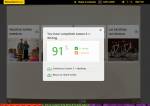
Perhaps the most difficulty I had was repeating the spoken descriptions…when I had no words above to prompt me. Luckily I could hit the green speaker button and get the phrases repeated multiple times, but I still missed more times than I care to admit. I redid more than a few sections involving repeated but not written phrases because I was dissatisfied with my scores.
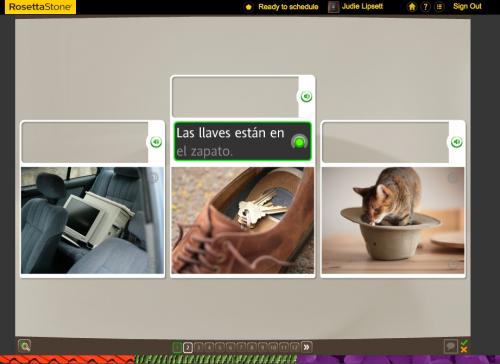
And suddenly, I was throw a total curve ball.
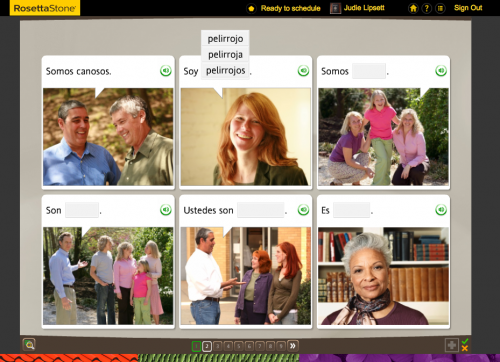
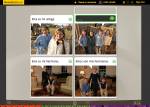
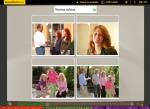
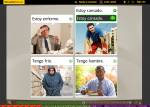
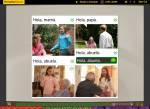
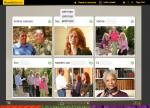
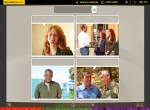
What are these people cackling about? It took me at least six do-overs before it dawned on me that they were talking about their freaking hair color. Really??! Gah. It was like – what is this? Gray is gris – we just had that, where did “canoso” and all its derivatives come from; but there they were.
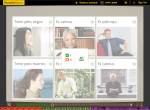
“Somos Canosos (We’re gray)” “Soy pelliroja (I’m a redhead)” “Somos rubia (We’re blonde)” ” Son rubias (They’re blonde)” “Ustedes son pellirojas (You’re redheads)” “Es conosa (It’s gray)” Granted, these are all rough translations, and I think the pronouns are being inferred, but I think that’s the gist.
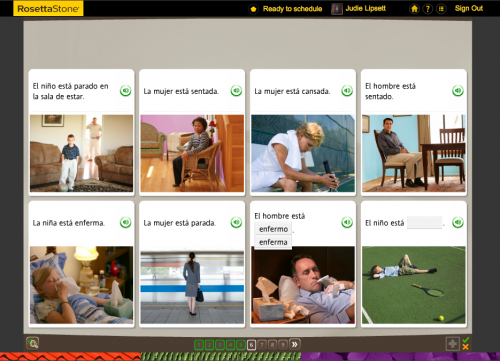
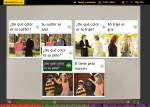
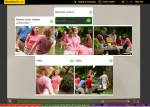
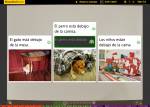
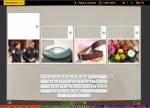
Ah, but that’s not all… Now we have “The boy stands in the living room,” “The woman is seated,” “The woman is tired,” “The man is seated,” “The girl is sick,” “The woman is standing,” “The man is sick,” and “The boy is tired” – although “sick” and “tired” were really the only new words here, which unrelated to Rosetta is how I feel right now (it’s after 3am as I write this).
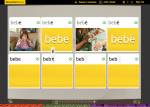
At this point in my lesson, I really started to feel good about my five weeks of Spanish lessons – check this out: I can now listen to bebe [bay-bay] (as in drink) and bebé [bay-beh] (as in baby) and tell which is which by the inflection of the speaker’s voice!
Even better, I can spot either correctly in vocal speed drills. 
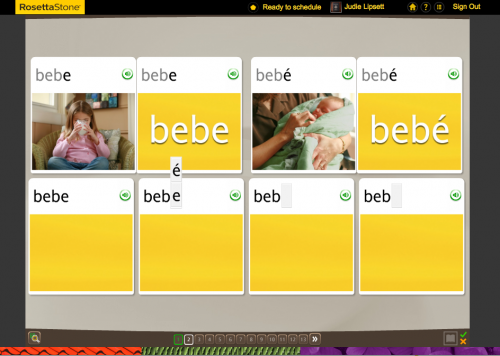
But the coolest thing is that when I listen to a speaker, I can also put the proper accent in place when writing, based on their proper enunciation.
I’ve got to admit though, this makes me worry about what might happen the first time a local starts slinging slang at me. It seems like there are all sorts of ways a little accent mark being missed might mess me up.
“A baby Coke? Drink a Coke? What?” :insert confused look here:
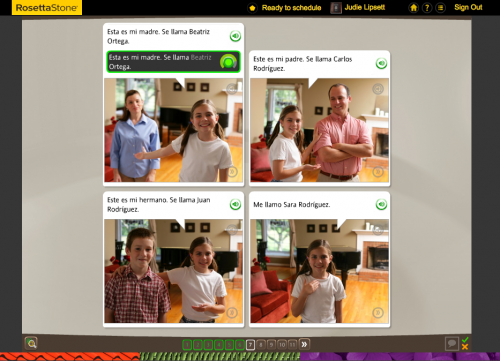
“This is my mother. Her name is Beatriz Ortega.” “This is my father.” His name is Carlos Rodriguez.” “This is my brother. His name is Jaun Rodriguez.” “My name is Sara Rodriguez.” Yes, this was a bit of review from last week, but I am still having trouble rolling my “R”s, and getting “Seh-rrah” and “Rrrrod-rrhe-gez” just right – though I think I am getting noticeably better.
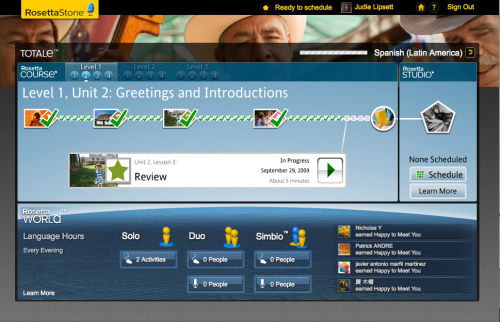
Because there were several sections that stumped me and I felt I needed to redo them for my own sanity, I didn’t quite finish section four. Also worth noting was that I didn’t get to do a Studio lesson because I didn’t make it to somewhere else with a better internet connection…BUT! I was able to practice a tiny bit with Martha, our Spanish-speaking maid. She didn’t roll her eyes…too much.
One of these days I would like to have an actual conversation with her that doesn’t include gestures and Spanglish. It’s coming…
¡Adíos! <<– See? I got that accent mark correct here, too! 🙂





















Be thankful! In the Spanish language, the “accent” only indicates the stressed syllable. In other languages it changes the letter to a completely different sound – that’s where the real fun begins, especially in language where there are multiple different marks possible and native speakers don’t write them in because they already know the words – ugh!
Oh believe me, I am thankful that it’s not worse that it could be. In fact, I am consistently impressed with how similar words are between English and Spanish – close enough that you can tell what they are when written, but far enough apart that the pronunciation is easily mangled. 🙂
The nice thing about Spanish is that the words are almost always pronounced exactly as written (except in Puerto Rico where they like to mangle the pronunciations a bit…) 🙂
“It gave a great overview of what the different parts of the course entailed, and how to navigate the various sections…and I couldn’t help but wonder why it didn’t show the first time I started the program!”
I’m one of the developers of TOTALe. You didn’t see it before this week because we just did an update of the site that included these videos. It’s fun to read about your success on something we worked so hard on.
@myerscarpenter – thank you for clearing that up! I was totally ready to blame it on WildBlue (my satellite provider). 😉